Português
 English

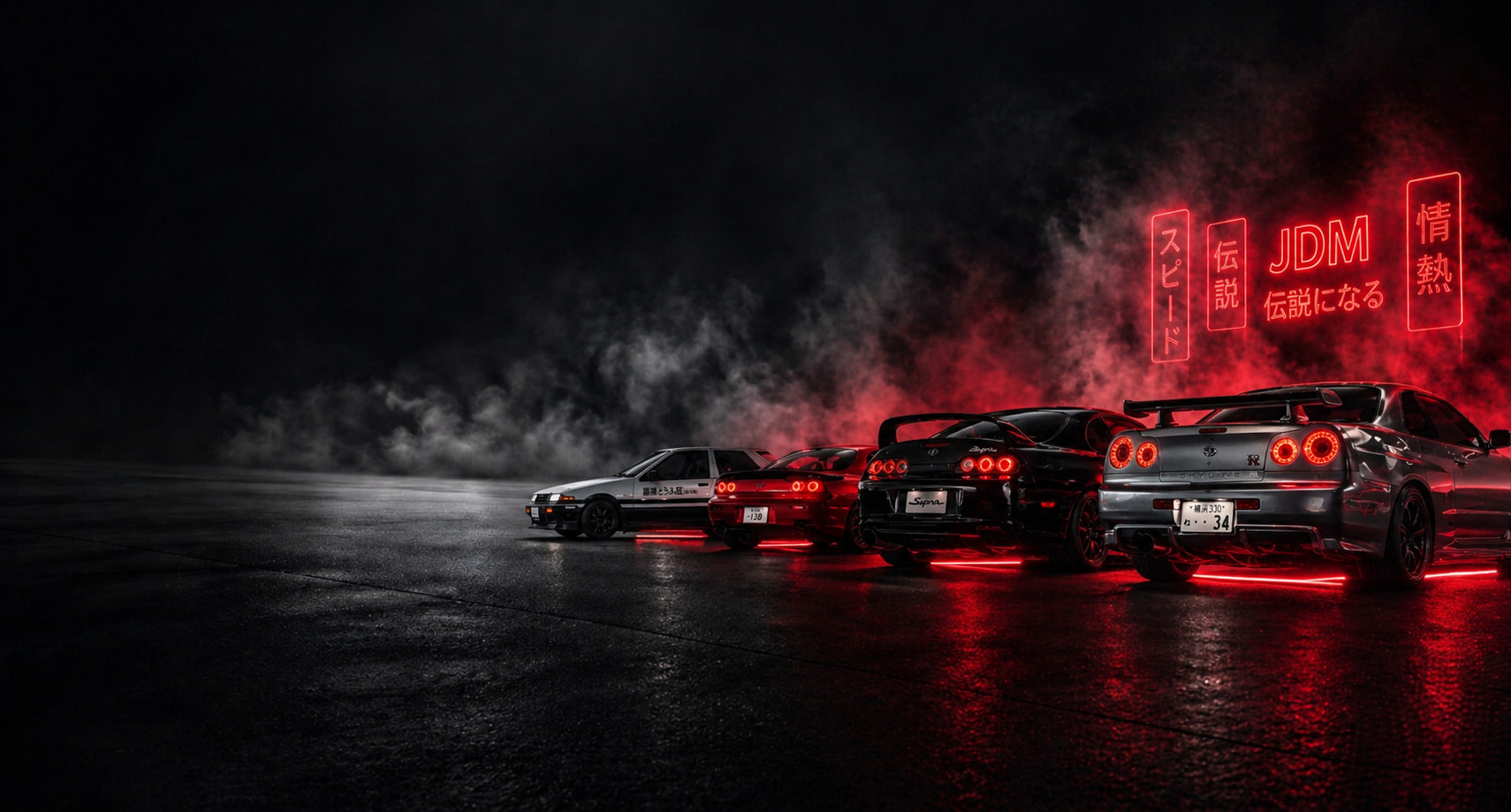
Few automotive movements have created an identity as strong as the JDM universe. More than just Japanese cars, the term represents a culture built on speed, technology, customization, and mechanical passion. From racing circuits in the mountains of Japan to the streets of cities like Los Angeles, São Paulo, and London, JDM cars have become global symbols of performance and style.
JDM stands for Japanese Domestic Market, an expression used to define vehicles originally manufactured for the Japanese domestic market. Many of these models featured exclusive specifications, more powerful engines, and technologies that were never officially sold in other countries.
Over time, the term stopped meaning simply “a car sold in Japan” and evolved into an entire automotive culture based on high-performance builds, compact turbo engines, drift and street racing, aggressive aesthetics, extreme customization, and reliable Japanese engineering.
JDM culture began gaining strength between the 1970s and 1980s, when Japanese manufacturers started challenging European and American automakers in performance and technology.
Brands like Toyota, Nissan, Honda, and Mazda invested heavily in innovation. While many American cars relied mainly on large-displacement engines, the Japanese developed smaller, lighter, and extremely efficient powerplants.
In the 1990s, considered by many to be the “golden era” of Japanese sports cars, legendary models emerged and completely changed the global automotive landscape.
JDM cars gained worldwide popularity thanks to three main factors:
- Racing games: Games such as Gran Turismo, Need for Speed Underground, and Initial D Arcade Stage introduced the world to Japanese cars that were previously unknown outside Japan. Thousands of young enthusiasts started dreaming about Skylines, Supras, and RX-7s after driving them virtually.
- Movies and pop culture: The Fast & Furious franchise played a decisive role in the explosion of JDM culture in the West. Brian O’Conner’s orange Toyota Supra became one of the most famous cars in movie history.
- Japanese drifting: Drifting turned Japanese drivers into legends. The sideways driving style popularized on Japanese mountain roads gained fans worldwide and helped immortalize lightweight rear-wheel-drive models.
Nissan Skyline GT-R R34
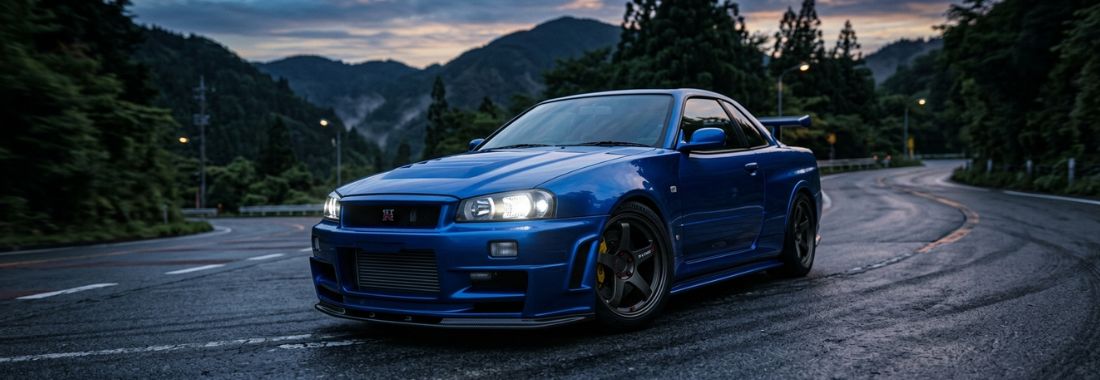
The Nissan Skyline GT-R R34 is considered one of the most legendary Japanese cars in automotive history. Released at the end of the 1990s, the model quickly gained fame for combining advanced technology, extreme performance, and an aggressive design that influenced generations. The R34 became even more popular thanks to racing games, anime, and movies, especially after appearing in the Fast & Furious franchise.
Under the hood, the GT-R R34 featured the iconic RB26DETT engine, a 2.6-liter twin-turbo inline-six known for its incredible durability. Although officially rated at around 280 horsepower due to the agreement among Japanese automakers at the time, many experts claim the actual output was significantly higher. The engine also became famous for handling builds exceeding 1,000 horsepower without sacrificing reliability.
Another major highlight of the R34 was its technology, which was extremely advanced for its era. The car featured the intelligent ATTESA E-TS Pro all-wheel-drive system, along with Super-HICAS rear-wheel steering, improving stability and high-speed cornering. The multifunction display, developed in partnership with Polyphony Digital, creator of Gran Turismo, showed real-time information such as turbo pressure, G-forces, and engine temperature.
Even decades after its launch, the Skyline GT-R R34 remains one of the most desired cars on the planet. Its limited production, massive impact on automotive culture, and strong presence within the JDM scene caused its value to skyrocket in the collector market. Today, finding an original R34 in good condition can cost hundreds of thousands of dollars, cementing the model as a true global icon of Japanese performance cars.
Toyota Supra MK4
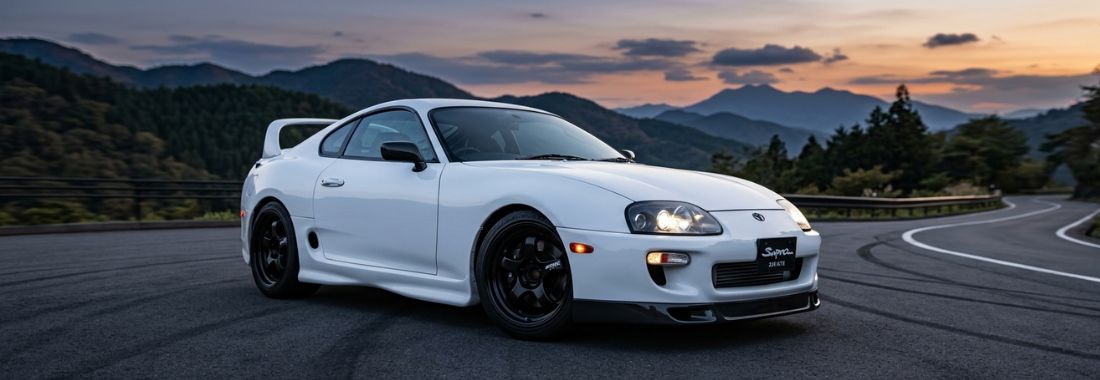
The Toyota Supra MK4, produced between 1993 and 2002, is one of the greatest symbols of JDM culture and one of the most famous Japanese sports cars in the world. Its aggressive design, featuring rounded lines and advanced aerodynamics for the time, helped the model stand out among 1990s sports cars. The car gained global fame mainly through movies, racing games, and the tuning scene, becoming a true automotive culture icon.
The true heart of the Supra MK4 was the legendary 2JZ-GTE engine, a 3.0-liter twin-turbo inline-six known for its extreme durability and massive tuning potential. Even in stock form, the engine delivered excellent performance, but its reputation came mainly from its ability to support builds exceeding 1,000 horsepower without requiring major internal modifications. This transformed the Supra into one of the favorite platforms for tuners worldwide.
Another interesting aspect of the Supra MK4 was its engineering focused on high performance. The car used sophisticated suspension, balanced weight distribution, and an extremely reliable mechanical setup. Toyota also invested in advanced aerodynamic solutions, such as the large rear wing and body shape, which improved high-speed stability. The result was a fast, stable, and highly capable sports car both on the streets and on the track.
The Supra MK4 became even more popular after appearing in the Fast & Furious franchise, especially with Brian O’Conner’s famous orange Supra. Since then, the car has come to represent an entire generation of tuning and Japanese car enthusiasts. Today, well-preserved examples reach extremely high values among collectors, consolidating the Supra as one of the most desired and respected JDM cars in history.
Mazda RX-7 FD
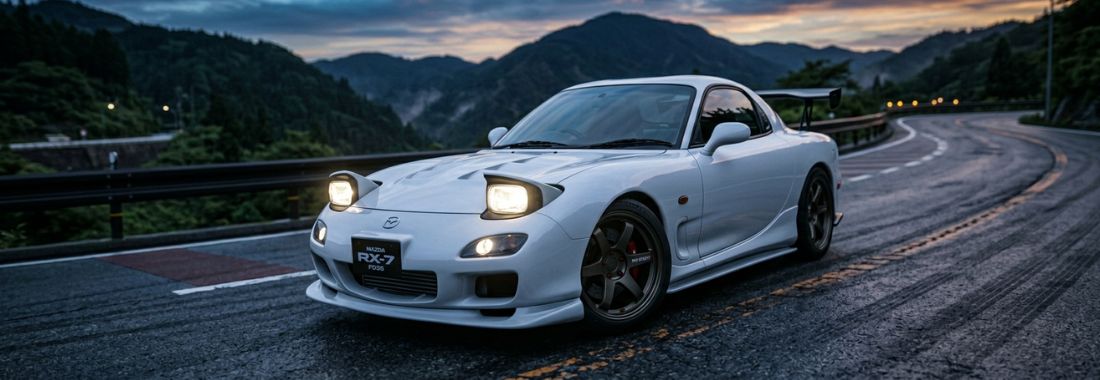
The Mazda RX-7 FD is an iconic Japanese car from the 1990s, mainly because of its futuristic design and incredibly light and balanced driving experience. Produced by Mazda between 1992 and 2002, the model attracted attention with its smooth lines, pop-up headlights, and sporty proportions that are still admired by enthusiasts worldwide. Its appearance became a benchmark within JDM culture and the tuning world.
The RX-7 FD’s greatest differentiator was its 13B-REW rotary engine, a rare technology in the automotive market. Unlike conventional piston engines, the Wankel engine used triangular rotors, allowing extremely high revs, quick throttle response, and a more compact and lightweight design. In addition, the RX-7 FD was one of the first Japanese cars to feature a sequential twin-turbo system, delivering strong acceleration at both low and high RPMs.
Thanks to its low weight, rear-wheel drive, and excellent weight distribution, the RX-7 FD became one of the favorite cars for drifting and track racing. The model also gained massive popularity in movies, games, and anime, cementing its image as one of the most desirable Japanese sports cars from the golden era of JDM. Even decades after production ended, the RX-7 remains a symbol of innovation, performance, and automotive passion.
Honda NSX
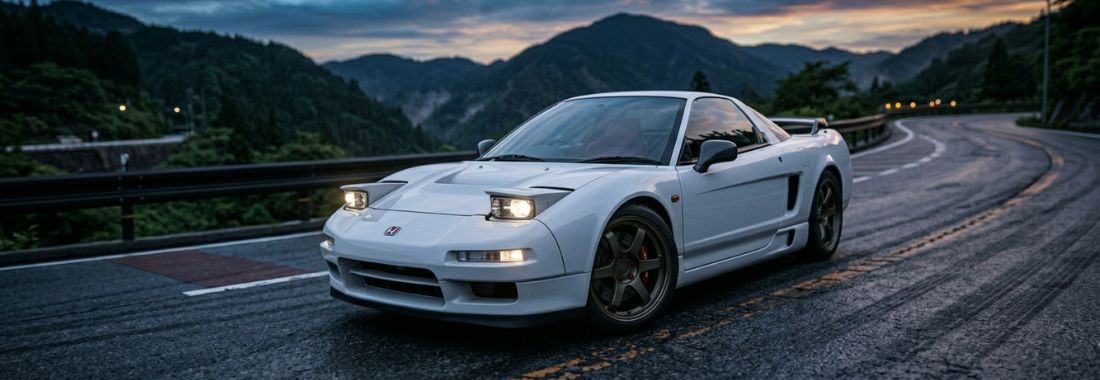
The Honda NSX revolutionized the supercar market in the 1990s by proving that it was possible to combine high performance, technology, and reliability in a single vehicle. Released in 1990, the model was developed to compete with European sports cars such as Ferrari and Porsche while offering friendlier daily drivability. Its low, wide, and aerodynamic design quickly transformed the NSX into one of the most respected Japanese cars in history.
One of the most fascinating facts about the NSX is Ayrton Senna’s direct involvement in its development. During the project’s testing phase, the Brazilian driver helped Honda engineers improve chassis rigidity and high-speed handling. The result was an extremely balanced supercar, precise in corners and highly advanced for its time. The NSX was also a pioneer in using an all-aluminum body, reducing weight and improving performance.
Under the hood, the Honda NSX used a V6 engine equipped with the VTEC system, a technology that varied valve timing to deliver power at high RPM without sacrificing low-speed efficiency. The car became known for its unusual reliability for a supercar, allowing daily use without the frequent mechanical issues found in many European rivals of the era. To this day, the NSX is remembered as one of the models that changed how the world viewed Japanese sports cars.
Nissan Silvia S15
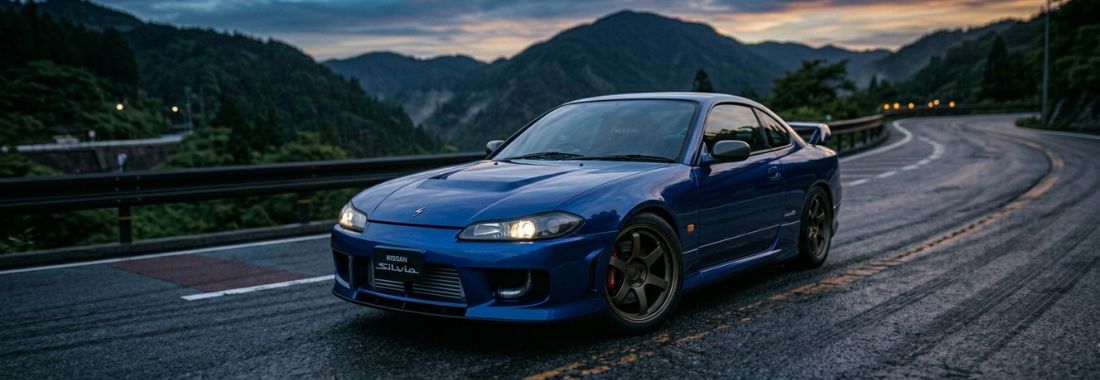
The Nissan Silvia S15 is one of the most beloved cars among drift and tuning enthusiasts. Released at the end of the 1990s, the model attracted attention with its aggressive design, compact body, and excellent dynamic balance. Its sporty lines, sharp headlights, and low stance transformed the S15 into one of the most desired Japanese cars from the golden era of Japanese sports cars.
The Silvia S15’s mechanical highlight was the SR20DET engine, a turbocharged 2.0-liter four-cylinder known for its durability and massive tuning potential. Combined with rear-wheel drive and the car’s lightweight construction, the setup delivered excellent cornering control and made drifting easier. Because of this, the S15 quickly became a constant presence in professional drift competitions in Japan and around the world.
Even after production ended in 2002, the Silvia S15 remains highly valued among collectors and JDM enthusiasts. Its popularity grew even further thanks to racing games, movies, and anime that helped immortalize the model within global automotive culture. Today, finding an original S15 in good condition has become increasingly difficult, making the car a true icon among classic Japanese sports cars.
Toyota AE86 Trueno
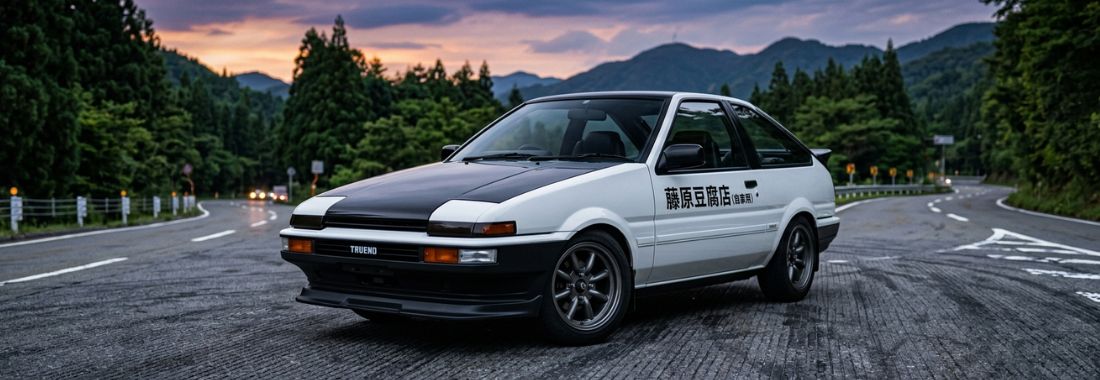
The Toyota AE86 Trueno became a true symbol of Japanese drifting. Produced during the 1980s, the model became famous for its lightweight construction, perfect balance, and rear-wheel drive, characteristics that made the car incredibly fun to drive. Even without being an especially powerful sports car, the AE86 won admirers worldwide because of its agility and exceptional cornering behavior.
The AE86’s greatest strength was its mechanical simplicity combined with dynamic efficiency. Equipped with the 1.6-liter dual-cam 4A-GE engine, the car delivered high revs and quick throttle response. Its lightweight chassis allowed excellent maneuverability, making the model ideal for drifting on Japan’s mountain roads, known as touge. This combination made the AE86 one of the most respected cars among drivers and enthusiasts of performance driving.
The Toyota AE86 gained enormous worldwide fame thanks to the anime Initial D, where the character Takumi Fujiwara drove a white Trueno through Japan’s mountain roads. The car became an absolute icon of Japanese automotive culture, influencing generations of drift, gaming, and tuning enthusiasts. To this day, the AE86 is considered one of the most important models in Japanese motorsport history and a true classic of the JDM universe.
Mitsubishi Lancer Evolution
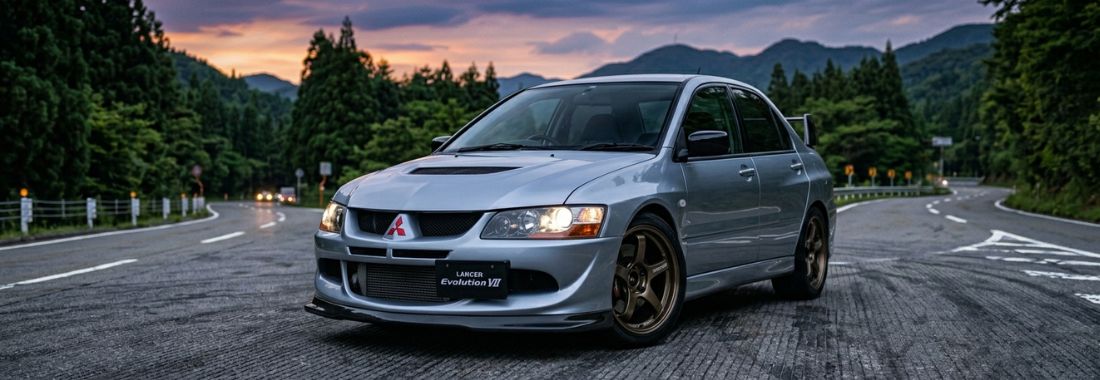
The Mitsubishi Lancer Evolution VII marked a new phase in the Evolution lineup by introducing a larger, more technological, and even more aggressive project. Developed with strong influence from world rally racing, the model was created to deliver extreme performance both on the streets and on the track. Its sporty design, featuring large air intakes, a prominent rear wing, and a muscular stance, quickly transformed the Evo VII into one of the most desired Japanese sedans of its era.
Under the hood, the Evolution VII featured the legendary 4G63 engine, a turbocharged 2.0-liter four-cylinder known for its durability and enormous tuning potential. Originally, the car produced around 280 horsepower, following the informal agreement among Japanese automakers during the 1990s and early 2000s. Even so, its performance was impressive thanks to strong torque delivery and brutal acceleration, especially out of corners and during launches.
Another major highlight of the Evo VII was its advanced all-wheel-drive system. The model used technologies such as the Active Center Differential (ACD), which automatically distributed power between the wheels to improve stability and grip. This allowed the car to maintain excellent control on wet roads, high-speed corners, and difficult terrain, characteristics inherited directly from Mitsubishi’s experience in the World Rally Championship (WRC).
The Lancer Evolution gained enormous worldwide popularity thanks to racing games, movies, and the tuning culture of the 2000s. The model became the direct rival of the Subaru Impreza WRX STI, creating one of the most famous rivalries in Japanese sports car history. Today, the Evolution VII is regarded as one of the most important models of the Evo lineage and remains highly valued by collectors and JDM enthusiasts.
Subaru Impreza WRX STI
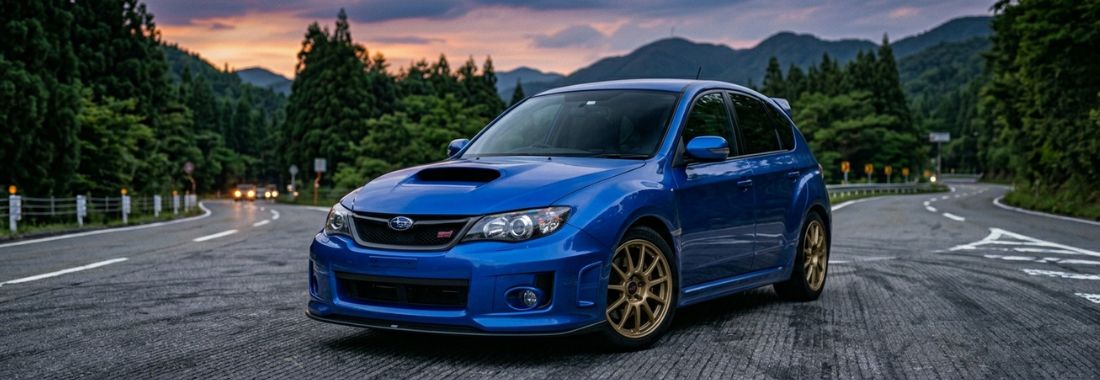
The Subaru Impreza WRX STI became known for combining rally-inspired performance with everyday practicality. Unlike previous, more compact generations, the model adopted a wider and more aggressive hatchback body style, improving stability and interior space. Its muscular appearance, with widened fenders, hood scoop, and large rear wing, reinforced the sporty identity that made the STI lineup famous worldwide.
Under the hood, the 2009 STI featured a turbocharged 2.5-liter boxer four-cylinder engine capable of delivering approximately 305 horsepower. The boxer engine, a traditional Subaru characteristic, helped lower the car’s center of gravity, improving stability and cornering behavior. In addition, the engine’s distinctive exhaust sound became one of the most recognizable signatures among fans of the Japanese brand.
Another important highlight of the Subaru STI was its Symmetrical All-Wheel Drive system, one of the most efficient AWD systems in the automotive industry. The setup delivered excellent traction across different types of terrain, especially in rain, snow, and low-grip conditions. The model also featured the DCCD system, allowing the driver to electronically adjust torque distribution between the axles for different driving styles.
The 2009 Impreza STI established itself as one of the most respected Japanese sports cars of the modern era, keeping Subaru’s strong World Rally Championship heritage alive. Its combination of power, all-wheel drive, and aggressive handling transformed the car into an icon of JDM culture and the tuning world. Even today, the model remains highly valued by enthusiasts searching for a versatile, fast, and incredibly fun sports car to drive.
JDM culture today
Even with stricter environmental laws and the rise of electric vehicles, JDM culture remains incredibly strong.
Classic Japanese models have become worth fortunes, and automotive events dedicated to the JDM universe take place on practically every continent.
Today, the movement blends:
- 1990s nostalgia
- Modern tuning builds
- Drift influence
- Gaming culture
- Automotive collecting
JDM has evolved from being just a niche into one of the largest automotive communities on the planet.
JDM cars defined generations because they delivered something rare: accessible performance, durable mechanics, and enormous customization potential.
More than speed, these cars created their own cultural identity. Every Skyline, Supra, RX-7, or Silvia carries decades of history, passion, and influence within global motorsport culture.
Even after so many years, the golden era of Japanese sports cars remains alive — and will probably continue inspiring new generations of enthusiasts for a very long time.