Português
 English

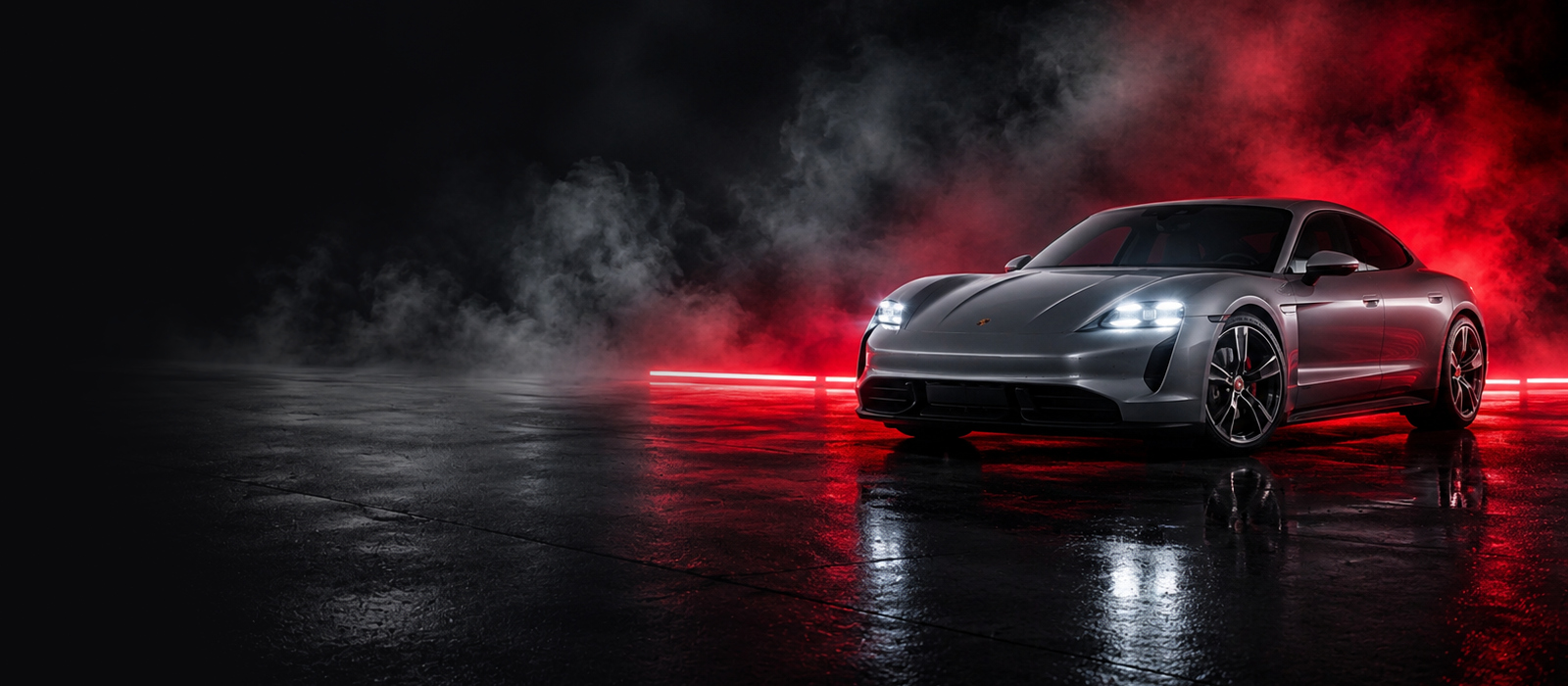
The Porsche Taycan was not just Porsche’s debut in the world of fully electric vehicles — it represented a major strategic shift within the automotive industry. Originally launched in 2019 and continuously updated ever since, the model has established itself as one of the leading references when it comes to combining performance with electrification.
Unlike many electric cars focused purely on efficiency, the Taycan was developed with a clear goal: preserving the sporty spirit of the brand. The most powerful versions, such as the Taycan Turbo S, deliver impressive numbers:
- Up to 761 horsepower (overboost)
- 0 to 100 km/h in approximately 2.8 seconds
- Dual-motor all-wheel drive
- Top speed close to 260 km/h
The model also stands out for its consistency. Unlike some electric vehicles that lose performance after repeated hard use, the Taycan is capable of maintaining high performance continuously — something essential for sporty driving and even track use.
800-Volt Architecture
The Porsche Taycan stands out in the electric segment thanks to its 800-volt electrical architecture, a significant advantage compared to the more common 400V standard. This technology enables more efficient and consistent energy delivery, reducing losses and improving the vehicle’s overall performance, especially under demanding conditions. In addition, the higher voltage helps reduce component heat buildup, improving system durability and maintaining stable performance even during intense use.
In practice, this advanced architecture mainly translates into significantly shorter charging times when connected to ultra-fast chargers, making the vehicle more convenient for both daily use and long-distance travel. Another benefit is the ability to sustain high power levels for longer periods, directly enhancing the driving experience. As a result, Porsche positioned the Taycan as a technological benchmark, balancing energy efficiency, performance, and usability within one of the most advanced electric systems in the automotive industry.
Dynamics and Handling
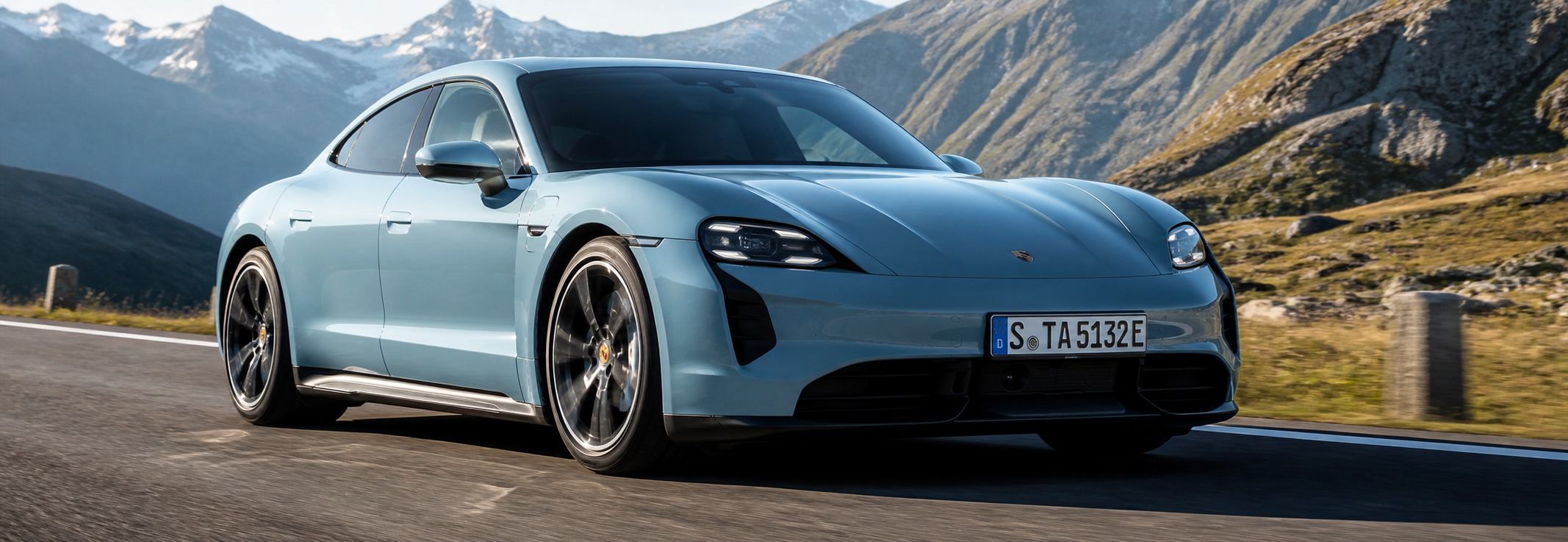
The Taycan was engineered to deliver a driving experience that respects Porsche’s sporting heritage, despite being a fully electric car. One of the key factors behind this is its extremely low center of gravity, made possible by the placement of the batteries within the floor structure. This characteristic significantly improves cornering stability, reduces body roll, and creates a driving feel much closer to what is expected from a traditional Porsche sports car.
Another crucial aspect lies in the dynamic precision provided by advanced electronic systems. The Taycan features real-time torque vectoring, independently distributing power between the wheels to maximize grip and control. Combined with all-wheel drive and adaptive suspension, the model achieves a refined balance between comfort and sportiness, allowing smooth urban driving while remaining highly precise during aggressive driving situations.
In addition, the immediate response of the electric motors contributes to an engaging and predictable driving experience. The linear acceleration, without delays, combined with carefully calibrated steering and chassis tuning, allows the Taycan to maintain an identity very close to iconic Porsche models such as the Porsche 911. The result is a car that not only delivers exceptional performance but also preserves the connection between driver and machine — one of Porsche’s historical pillars.
Design and Technological Interior
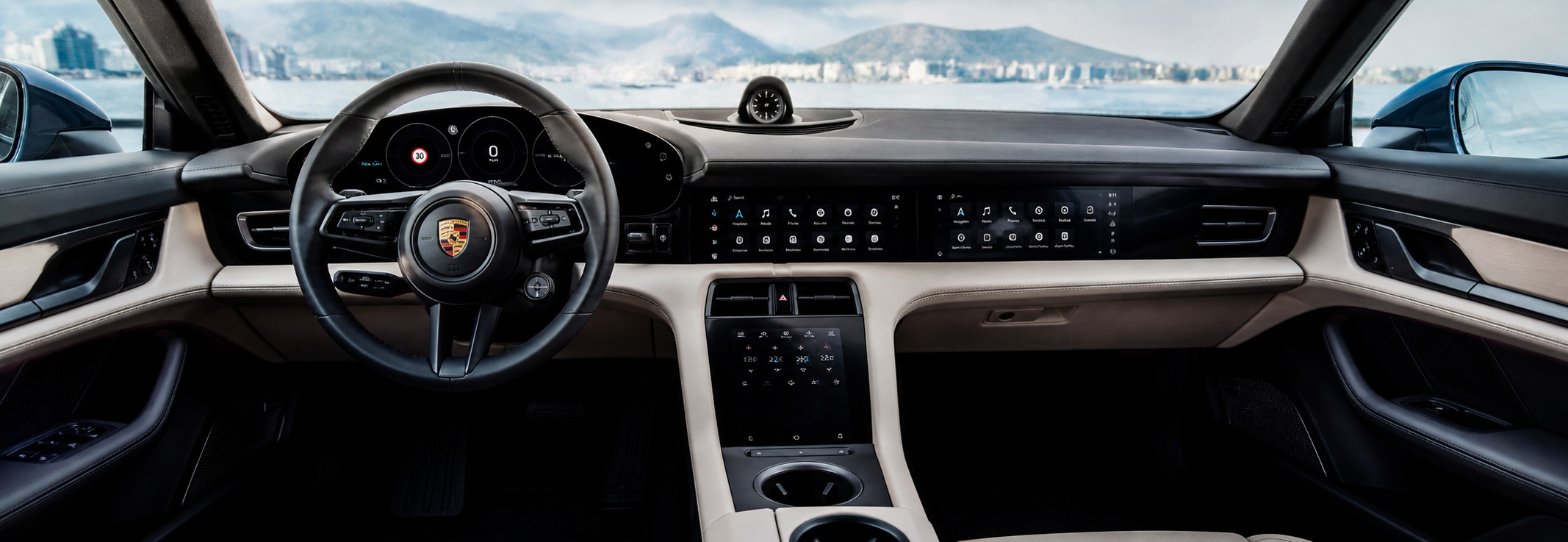
The design perfectly reflects the concept of a modern electric sports car without abandoning Porsche’s classic styling cues. The low and elongated silhouette, combined with smooth aerodynamic lines, reinforces the sporty identity while optimizing energy efficiency. Elements such as the LED signature headlights and the continuous rear light bar create a striking visual presence while emphasizing the futuristic character of the model.
Inside, the Taycan embraces a highly technological approach, replacing much of the traditional physical controls with digital surfaces. The dashboard is dominated by multiple high-resolution displays, including the curved instrument cluster and central screens that control nearly every vehicle function. This setup not only modernizes the cabin but also enables constant software updates, keeping the vehicle aligned with technological advancements over time.
Despite the strong digital presence, the Taycan preserves Porsche’s premium craftsmanship standards. High-quality materials, sustainable options, and refined attention to detail ensure a sophisticated experience. The balance between technology and luxury makes the model not only innovative but also comfortable and exclusive, meeting the expectations of both enthusiasts and customers seeking a high-end electric vehicle.
Versions and Model Range
The Porsche Taycan lineup has expanded over the years to serve different types of customers, from those seeking an entry-level premium EV to buyers looking for extreme performance. The base version already delivers a balanced combination of power and efficiency, while variants such as the 4S and GTS add progressively sportier characteristics with more refined suspension tuning, increased power, and sharper driving responses.
At the top of the range, the Turbo and Turbo S versions represent the pinnacle of Porsche’s electric engineering applied to the model. Despite the nomenclature inherited from combustion-engine vehicles, these models are fully electric and stand out for their astonishing acceleration, advanced onboard technology, and strong focus on performance. They position the Taycan as a true sports car capable of competing with high-performance models both inside and outside the electric segment.
In addition to the sedan versions, the lineup also includes alternatives with distinct purposes, such as the Taycan Cross Turismo and Sport Turismo, which expand the model’s versatility. These configurations offer more interior space and features aimed at practicality without sacrificing the sporty identity. As a result, the Taycan has become a complete family of electric vehicles, combining performance, technology, and different levels of usability within the same concept.
Market Impact
The Porsche Taycan played a decisive role in consolidating electric vehicles within the premium segment, especially by proving that performance and electrification are not opposing concepts. By entering the market with strong sporty appeal, Porsche helped change the perception that EVs were only efficient and quiet, raising the standards for handling and build quality in this type of vehicle. The model also pressured both traditional competitors and new manufacturers to invest more heavily in performance, accelerating technological evolution across the sector.
In addition, the Taycan directly contributed to Porsche’s broader electrification strategy, paving the way for new models and strengthening public acceptance of high-value electric vehicles. Its presence in the market increased consumer confidence regarding the durability, usability, and driving pleasure of EVs, influencing both buyers and the automotive industry as a whole. In this way, the model not only follows the transformation of the automotive sector but also acts as one of the key protagonists driving this change.
Points of Attention
Despite all its technological advancements, the Porsche Taycan still faces some limitations typical of the high-performance EV segment. While its range is suitable for everyday use, it may fall behind some direct competitors under certain conditions, especially when driven aggressively. In addition, energy consumption tends to increase significantly at high speeds or during continuous performance driving, which may require more planning on longer trips.
Another relevant factor involves cost and infrastructure. The high price positions the Taycan within a very restricted niche, especially in markets such as Brazil, where taxes and import costs further increase its value. Combined with the dependence on an efficient charging network, this can still become a limiting factor in some regions, particularly outside major urban centers. These aspects do not compromise the model’s proposal, but they remain important considerations for potential buyers.